
Germ Is a (Protocol-Native, End-to-End Encrypted) Social Media Messenger
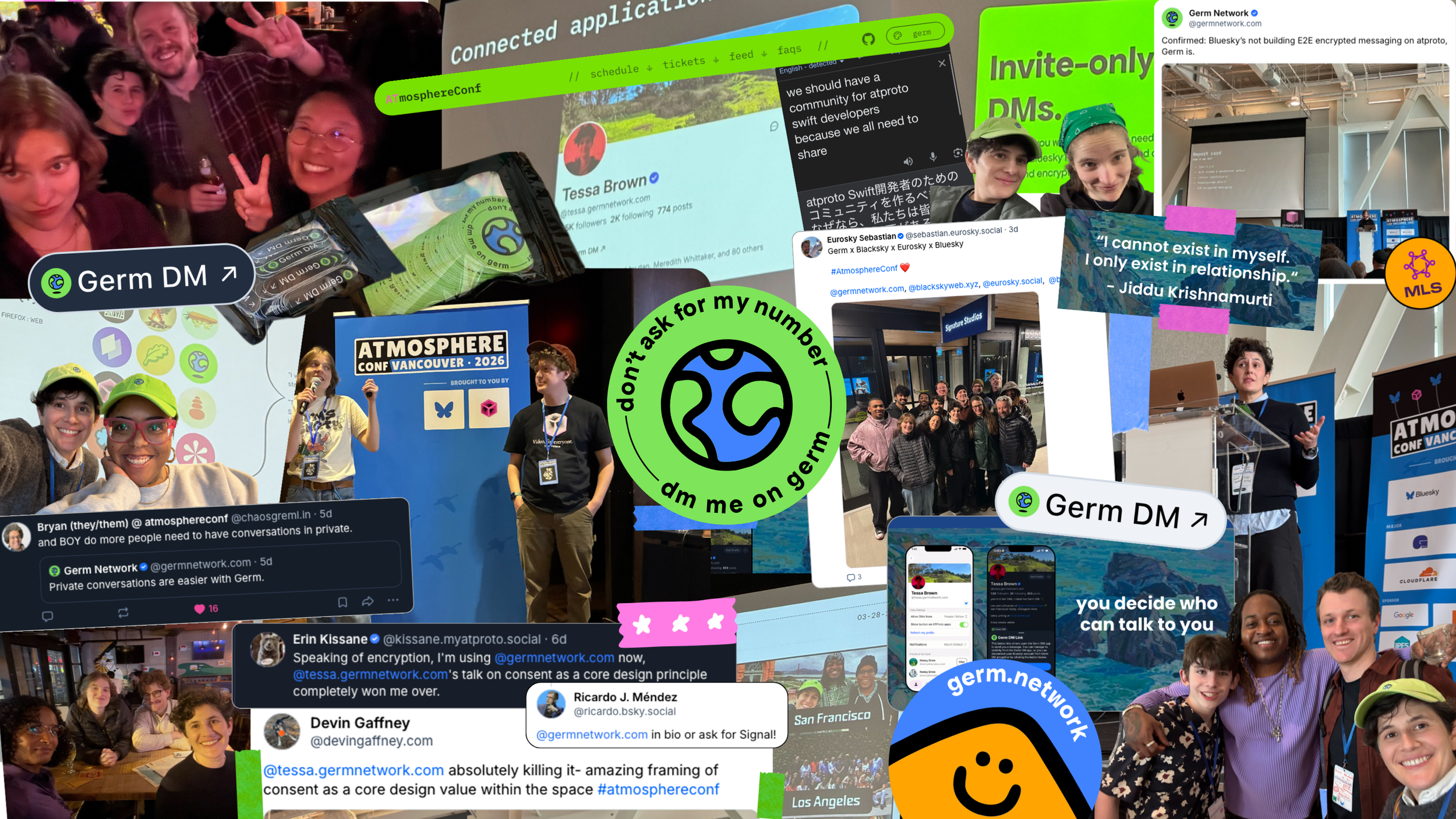
Atmosphere Conference 2026 is a wrap!
We spent the end of March in Vancouver at the Atmosphere Conference, and being with fellow builders in the protocol ecosystem powering Bluesky and 1000s of other apps solidified something about our place in it: Germ DM is a social media messenger. We’re like Signal, rebuilt to talk to your friends from social.
Germ DM is a standalone messenger, but it’s been built from the beginning to integrate external identities. Our technical innovation, our own AC Protocol, frees secure messaging from phone numbers and allows people to use a range of identities in our app. Germ is built to support conversations via multiple identities.
AT Protocol (or atproto, as the insiders call it) has been a perfect place to grow our messenger because the Atmosphere, or the universe of apps built on atproto, is a microcosm of the internet. The protocol holds user data and preferences, allowing a universe of apps to spring up that share users and content.
(Our CEO Tessa goes deep on her personal blog in “1 Year on the ATProtocol: Part II.”)
Today, you can DM on Germ with one atproto handle and multiple burner cards. But those numbers will grow as our product expands.
Atproto handles (really, the underlying DIDs) are the first external identities we brought into Germ. Since atproto is an open protocol, we didn’t need anyone’s permission to let you log into atproto from Germ. Putting Germ back into Bluesky was a bit more hacky: we built special links that our app helped beta users paste into their profiles. But the experiment was so successful that we moved into an official product partnership with Bluesky. Bluesky now helps users chat in Germ via a badge on their profiles that launches a message with them Germ DM.
On the same day Bluesky launched the Germ button, we also published developer guidance for other atproto devs to bring the button into their apps. Shipping fast as ever, Blacksky launched the Germ button on the same day to their 2 million users. Since then, about an app a week has brought Germ directly to their users! By popular request, we also shared further style and design guidance.
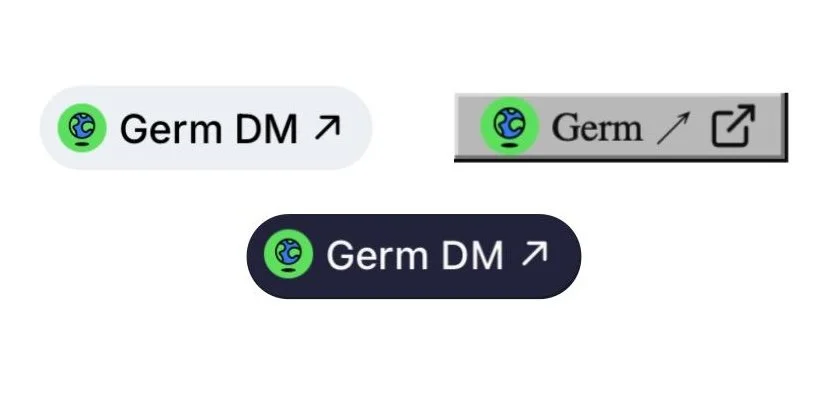
Launch Germ DM from integrated buttons on Bluesky, atproto IM, and Blacksky
Germ was built outside atproto and to serve identities and communities beyond atproto. But atproto is our first, and maybe most important, stop. Its vibrant app ecosystem is helping us validate our hypothesis that people want to talk privately to their friends from wherever they meet them, using whatever identities they know them as already.
The success of Germ in the ecosystem is also validating our hypothesis that buliding Germ the hard way—with our own identity protocol, in native apps, with no compromises on your security—is a moat. As Bluesky's head of protocol Daniel Holmgren wrote recently, “E2EE is hard.” And as Bluesky CTO Paul Frazee said in his retrospective of their last year, E2EE messaging is the one promise Bluesky punted to Germ, because we can do it better.
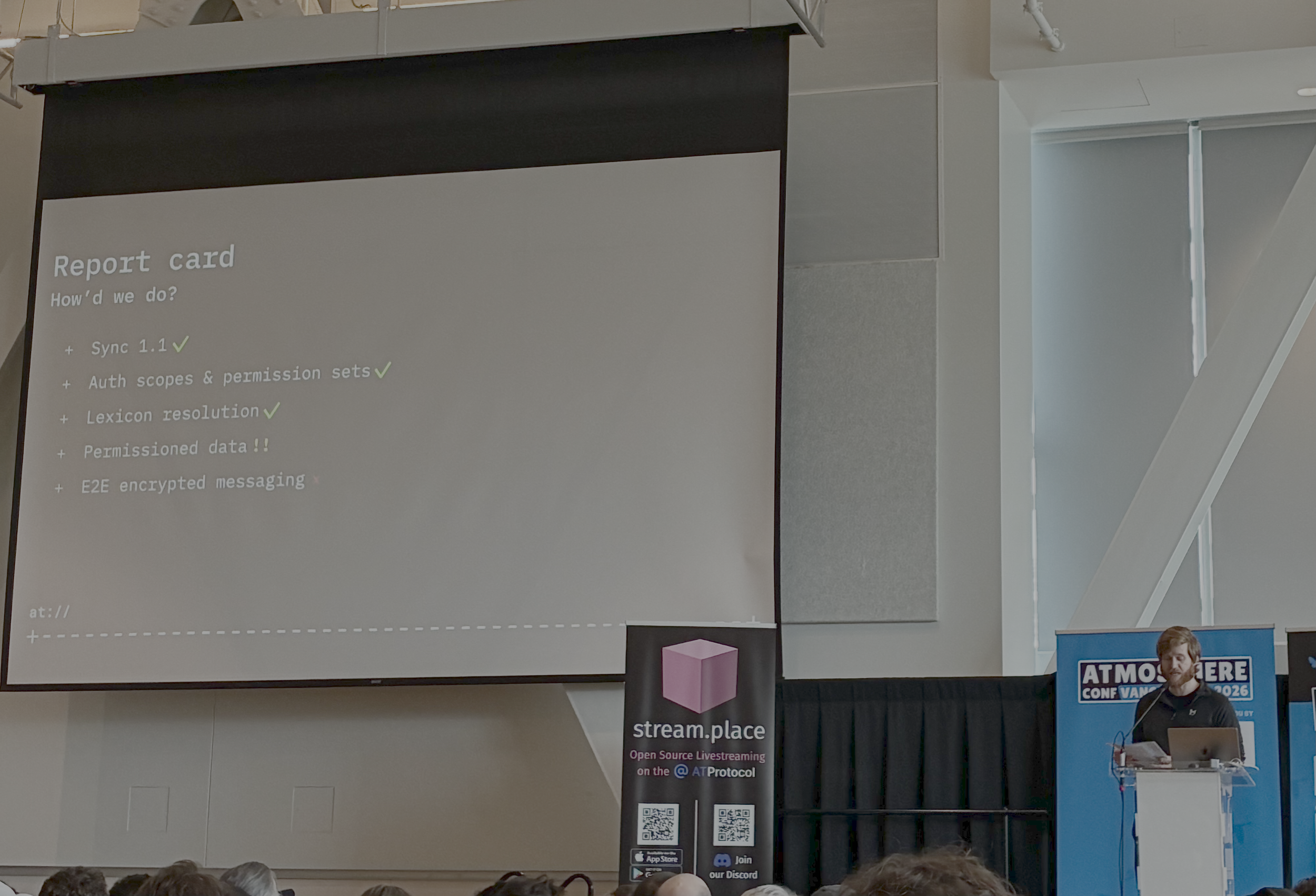
Bluesky CTO Paul Frazee shares that Bluesky is not building E2EE DMs, but Germ is!
While existing messengers are designed as standalone products, Germ is designed to be in a symbiotic relationship with external social products. That’s why these days we often invoke the relationship between Facebook Messenger and Facebook to describe the way that Germ interacts with Bluesky and other apps on atproto. This character was built into Germ’s core technology and experience before we came to atproto, through elements like:
Germ’s Autonomous Communicator Protocol, designed to bring multiple identities into the Germ app
Mobile-first design, optimized for everyday messaging the way people really chat today
Prioritizing the 1-1 chat experience
State of the art E2EE by default, now table stakes for daily messaging
Now we’re learning what it means to be a social media messenger, and it’s shaping our feature roadmap. We’re working towards:
showing your atproto friends inside Germ
small group chats
our Android app
And more!
We know everyone is eager for these features and we appreciate your feedback online. We’ll continue building in ways that prioritize best-in-class privacy and protocol-level interoperability. It may not look like the fastest game in town, but we’re betting it’s the most durable and ultimately the most scalable—and we’re proud to have your support so far.